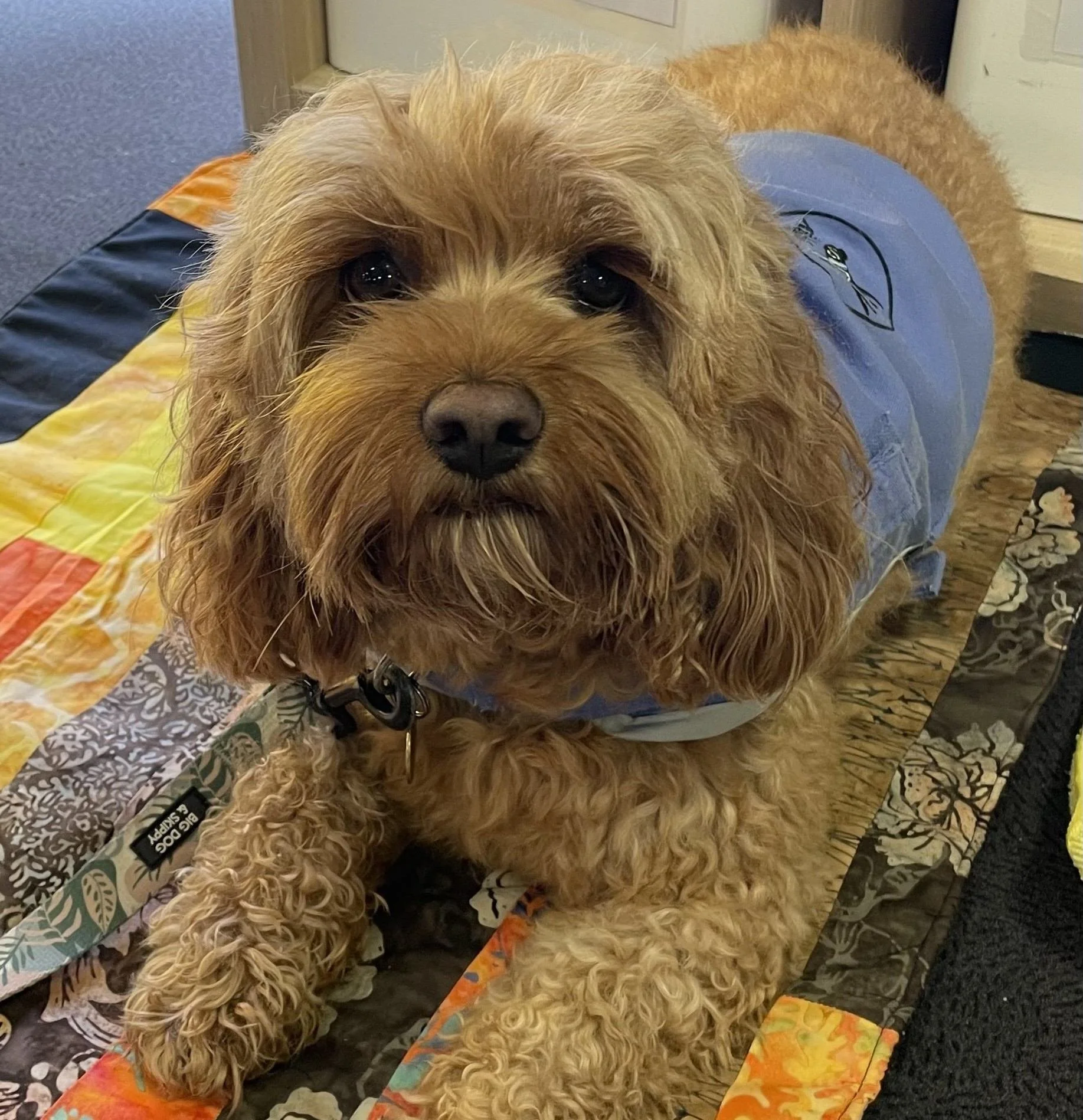
Animal-assisted Therapy
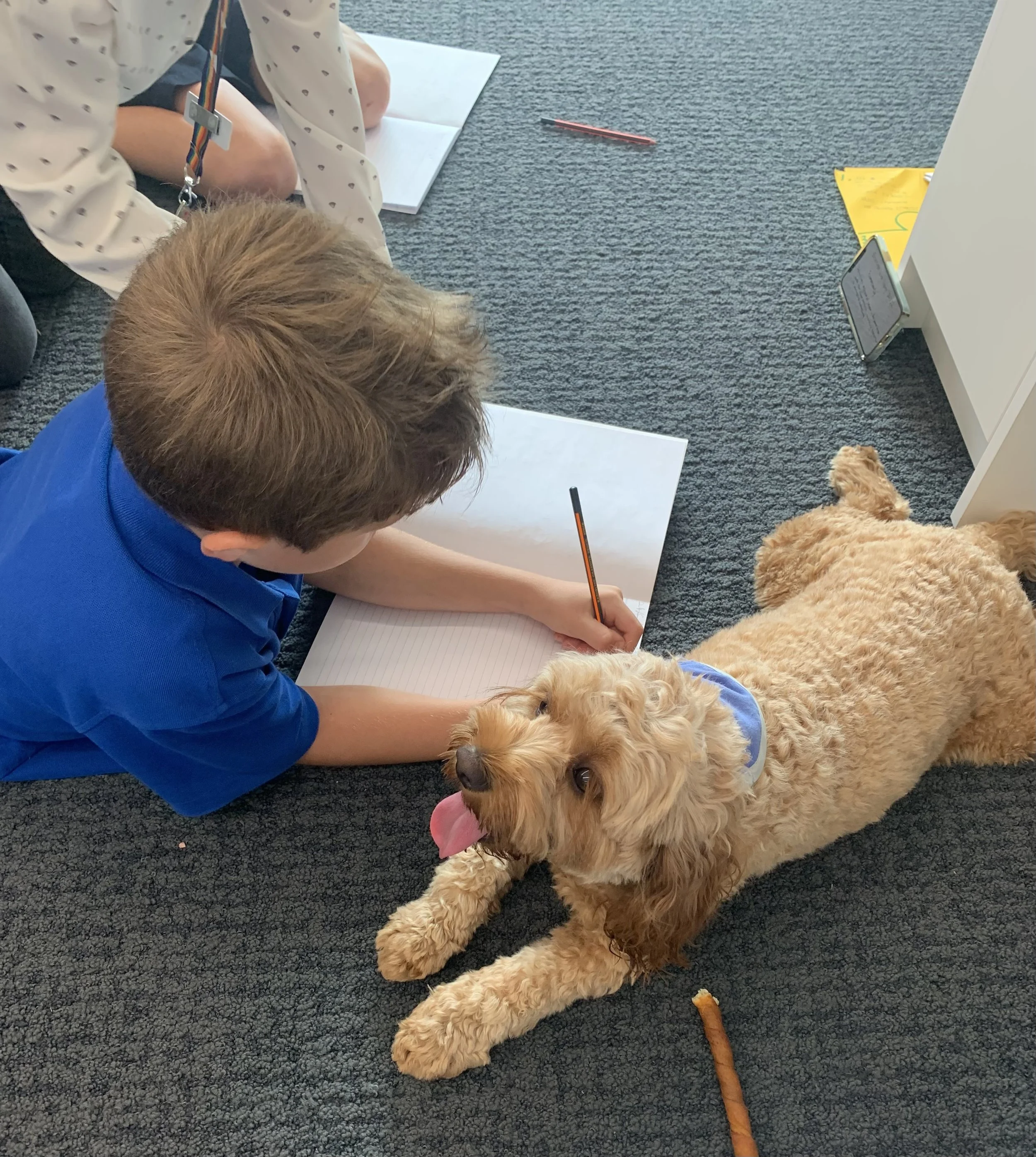
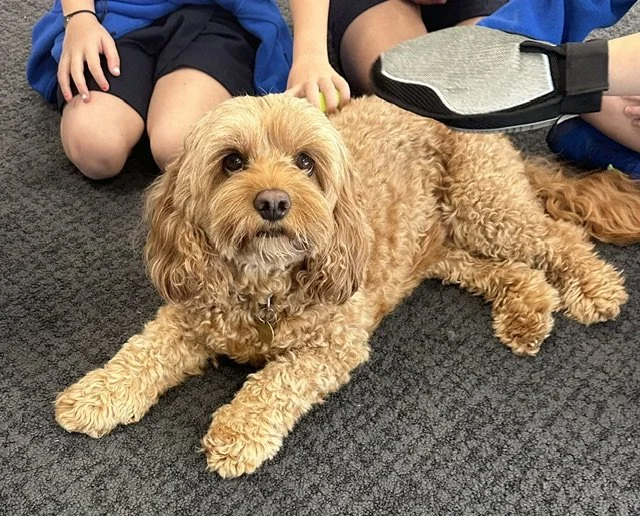
Animal-assisted therapy incorporates the presence of a certified therapy dog as part of the counselling process to support engagement, connection and emotional wellbeing. For some children, having a therapy dog present can make counselling feel more comfortable and provide a gentle way to connect, communicate and explore emotions. Winnie may be incorporated into sessions through play, activities, relaxation or simple training exercises, depending on the child's needs and therapeutic goals. Animal-assisted therapy is offered as an adjunct to counselling and is always guided by the child's comfort, preferences and individual needs.
Who is animal-assisted therapy for?
Animal-assisted therapy may be particularly helpful for children who feel anxious or hesitant about traditional counselling, find verbal expression difficult, or feel more comfortable communicating through play and activities.
It may also suit children who respond positively to animals, enjoy movement and practical activities, or benefit from a calm, relationship-focused and strengths-based approach.
Every child is different, so Winnie's involvement is tailored to the individual child. She may be actively involved in an activity, or simply provide a calm presence nearby.
What concerns can animal-assisted therapy support?
Animal-assisted therapy can support children experiencing a range of emotional, social and wellbeing challenges, including anxiety and worries, big emotions and emotional regulation difficulties, low confidence or self-esteem, friendship and relationship concerns, school-related challenges, family changes and significant life transitions.
Activities involving Winnie can also provide opportunities for children to practise skills such as communication, patience, confidence, emotional awareness, problem solving, flexibility and self-regulation in an engaging and supportive environment.
What might a session look like?
Sessions are 50 minutes and are individually tailored to each child. Depending on their needs and therapeutic goals, a session may include conversation, creative activities, games, movement, relaxation activities or interaction with Winnie.
Some children may enjoy activities such as practising tricks, playing, grooming or completing simple activities with Winnie. For others, Winnie may simply remain nearby while the child participates in other therapeutic activities.
The focus remains on counselling and the child's therapeutic goals, with Winnie included when her presence can support the therapeutic process.
My counselling approach
My approach is child-centred, strengths-based and collaborative. I recognise that every child communicates differently and that a traditional talk-based approach may not feel comfortable or engaging for every child.
I work at the child's pace, building a trusting therapeutic relationship and using their interests and strengths as a starting point. Animal-assisted therapy provides another way for children to participate, communicate and develop emotional wellbeing skills while feeling supported and understood.
What can parents expect?
Before counselling begins, we will discuss your child's individual needs, current challenges and what you hope counselling will support. This helps me consider whether animal-assisted therapy is an appropriate approach for your child.
Sessions are tailored to the individual child, and the amount of interaction with Winnie may vary from session to session. Her involvement is always optional and guided by your child's comfort and needs.
Parents can expect a warm, supportive and professional approach, with appropriate communication about their child's progress while respecting their privacy and confidentiality.
Animal-Assisted Therapy FAQ’s
-
For some children, having a therapy dog nearby can help create a calm and welcoming environment and make counselling feel more comfortable and engaging. Winnie can also be incorporated into activities that provide opportunities to practise communication, confidence, patience, emotional regulation and other therapeutic skills.
Her involvement will look different for every child. The focus remains on the child's individual counselling goals, with Winnie included when her presence can support the therapeutic process.
-
Animal-assisted therapy may provide a supportive and engaging way for children to explore anxiety, big emotions and emotional regulation difficulties.
Through therapeutic activities, children may have opportunities to practise calming strategies, communication, patience, flexibility, confidence and emotional awareness. Animal-assisted therapy is individually tailored and forms part of a broader counselling approach based on the child's needs and therapeutic goals.
-
Calming Paws Therapy provides animal-assisted therapy in Highett, Melbourne's Bayside area, supporting children and families from surrounding suburbs including Sandringham, Hampton, Brighton, Black Rock, Beaumaris, Moorabbin and Cheltenham.
If you're wondering whether animal-assisted therapy could be a good fit for your child, get in touch to discuss your child's needs and whether Calming Paws Therapy may be suitable.
If you're wondering whether animal-assisted therapy with Winnie could be a good fit for your child, I'd be happy to have an initial conversation with you. Get in touch to discuss your child's needs and whether Calming Paws Therapy may be suitable.